
Oceans | Parenthood
Season 44 Episode 8 | 51m 50sVideo has Audio Description
Ocean parents must master dedication and intelligence to raise their young.
Ocean parents must master dedication and intelligence to raise their young. In Australia, an orca mother teaches her young how to hunt blue whales, while in Indonesia, a Banggai cardinalfish protects his young inside his mouth.
See all videos with Audio DescriptionADProblems playing video? | Closed Captioning Feedback
Problems playing video? | Closed Captioning Feedback
Major support for NATURE is provided by The Arnhold Family in memory of Henry and Clarisse Arnhold, Sue and Edgar Wachenheim III, The Fairweather Foundation, Charles Rosenblum, Kathy Chiao and...
Oceans | Parenthood
Season 44 Episode 8 | 51m 50sVideo has Audio Description
Ocean parents must master dedication and intelligence to raise their young. In Australia, an orca mother teaches her young how to hunt blue whales, while in Indonesia, a Banggai cardinalfish protects his young inside his mouth.
See all videos with Audio DescriptionADProblems playing video? | Closed Captioning Feedback
How to Watch Nature
Nature is available to stream on pbs.org and the free PBS App, available on iPhone, Apple TV, Android TV, Android smartphones, Amazon Fire TV, Amazon Fire Tablet, Roku, Samsung Smart TV, and Vizio.
Buy Now
Explore More Ways to Watch
Bring the beauty and wonders of wildlife and natural history into your home with classic NATURE episodes.Providing Support for PBS.org
Learn Moreabout PBS online sponsorshipMore from This Collection
This five-part natural history series explores the extraordinary strategies and adaptability that animal parents employ to give their young a head start in life. Narrated by David Attenborough.
The Greatest Adventure | Parenthood
Video has Audio Description
Parenthood is the ultimate journey, full of danger. (54m 33s)
Video has Audio Description
See how jungle animal parents raise children by mastering their environment. (52m 22s)
Video has Audio Description
Animal parents must overcome freshwater’s constant changes. (52m 14s)
Video has Audio Description
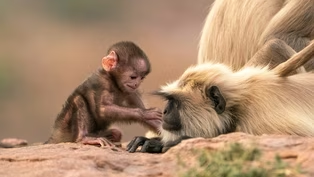
Animal parents must balance risk and reward to raise their young in grasslands. (51m 54s)
Providing Support for PBS.org
Learn Moreabout PBS online sponsorship♪♪ ♪♪ ♪♪ ♪♪ -Incredible ingenuity... dedication... and extraordinary teamwork.
This is what it takes to be a parent on our planet.
[ Lioness hisses, lion cub cries ] Meet the hard-working parents raising their families... doing all they can to protect... and provide for the next generation.
Discover the extraordinary ways animal parents navigate their world.
But a changing planet is forcing them to adapt.
Success for all parents has perhaps the greatest of consequences.
It ensures the future of life on Earth.
This is "Parenthood."
♪♪ ♪♪ ♪♪ -A newly born bottlenose dolphin -- its skin still creased by the tightness of the womb from which it has only just emerged.
♪♪ ♪♪ Its mother is devoted to it and will care for it for the next five years.
That is an unusually long time for any oceangoing animal.
Most marine creatures simply abandon their young as soon as they appear.
♪♪ But those who care for them do so in some very remarkable ways.
[ Waves crashing ] ♪♪ Coral reefs occupy less than 1% of the floor of the world's oceans, but they provide homes for over a quarter of all marine species.
♪♪ Indonesia's reefs are among the most diverse on Earth.
Over 2,000 species of fish live here, and most reproduce in the simplest of ways.
Females release their eggs, and the males rush in and fertilize them.
The young are then swept away, and few, if any, will meet their parents again.
♪♪ But one fish behaves very differently -- the Banggai cardinalfish.
♪♪ The adults spend most of their time among sea urchins, protected to some degree by the urchins' spines.
♪♪ When a female is ready to spawn, she leads a male away from the shoal.
♪♪ She displays to him, quivering her distended fins.
♪♪ And then she releases a mass of eggs, which he... takes into his mouth.
He hasn't swallowed them.
On the contrary, he is protecting them.
♪♪ But for the next four weeks... he won't be able to eat.
♪♪ Starvation, however, is the least of his worries.
♪♪ There are predators around... ♪♪ ...of many kinds.
♪♪ ♪♪ An unguarded baby fish would be quickly eaten, so the hatchlings stay inside their father's mouth.
♪♪ This anemone could provide the male with a home, for although its tentacles have stings, he is immune to them.
But his predators are not.
The resident anemone fish is also immune, but this one doesn't welcome strangers.
This anemone, however, seems to have vacancies.
The male picks his moment to leave the safety of the urchin's spines.
♪♪ Here... he is not alone.
♪♪ But this anemone fish doesn't mind sharing.
He has found a new home for his young.
♪♪ But they seem unwilling to leave his mouth... ♪♪ ...so he gives them a little encouragement.
♪♪ ♪♪ But there's always one who is reluctant to leave.
♪♪ Here, among the anemone's tentacles... they will remain until an urchin appears who has vacancies.
♪♪ His 30 days of fasting have given his young an excellent start in life.
♪♪ But parental responsibilities extend far beyond providing shelter for the mammals that live around the reef.
[ Dolphins clicking, whistling ] ♪♪ A bottlenose dolphin mother spends five years showing her calf the skills necessary for survival.
And she does so through play.
♪♪ The lessons start with a trick.
First... balance a piece of coral on your nose.
♪♪ Second, take it up to the surface.
Third, drop it.
♪♪ And then, before it reaches the bottom... ♪♪ ...catch it.
[ Dolphins clicking ] All adults can perform this trick.
♪♪ Perfecting it is, therefore, a rite of passage for this calf.
♪♪ First, balance the coral.
♪♪ [ Dolphin calf clicking ] This is not easy.
Try again.
♪♪ Step one, balance the coral.
♪♪ Or bite it... and skip to step two.
Now...catch it.
♪♪ ♪♪ ♪♪ Got it.
Just in time.
There are also other more important skills that a calf must learn.
[ Dolphin squeals ] The mother leads her youngster to one particular kind of coral that is almost hidden.
One that has a special, extraordinary characteristic.
It produces antifungal chemicals which dolphins rub on their skin.
These dolphins remarkably medicate themselves, and they pass on this knowledge to their young.
♪♪ ♪♪ ♪♪ Passing on skills such as these is part of good parenting.
♪♪ [ Waves crashing ] The south coast of Australia.
Here the shallow sea for 5,000 miles is carpeted by dense seaweed.
These underwater meadows thrive in the cold, turbulent water.
♪♪ And one remarkable fish has evolved here and exists nowhere else -- the weedy sea dragon.
♪♪ It's marvelously camouflaged and an exceptionally dedicated parent.
♪♪ In spring, male and female dance together.
♪♪ They mirror each other's actions.
♪♪ ♪♪ He seals their bond by attaching her eggs to his tail.
The eggs are bright pink and make him dangerously conspicuous.
♪♪ ♪♪ But within a few weeks, the eggs become covered by algae... ...and that makes them less obvious.
♪♪ After six weeks, his parenting duties come to an end.
The baby dragons begin to hatch.
♪♪ They're just half an inch long, perfect miniatures of their parents.
♪♪ They share their micro world with one of the strangest creatures in the seas.
Skeleton shrimps.
They're seldom noticed, but they live in oceans worldwide.
♪♪ They're armed with formidable weapons, and they are remarkably attentive parents.
♪♪ About 25 juveniles cling to their mother until they're strong enough to grip the seaweed.
♪♪ She needs to feed them... and the best food is at the top of the seaweed.
♪♪ And that is where she takes them.
♪♪ Carrying as many young as this is exhausting... ♪♪ ...and if she stops, she risks everything.
♪♪ She falls onto an urchin, which catches her with its tube feet and starts transporting her towards its mouth.
♪♪ But she wriggles free and resumes her climb.
♪♪ Skeleton shrimps live in colonies and compete for the best feeding places.
♪♪ ♪♪ This looks good.
And she waits for something edible to drift by.
♪♪ This mysid is big enough to provide a meal for the shrimp's entire brood.
♪♪ ♪♪ Her young clamber over her head to claim a share.
♪♪ Once fed, they leave, giving her a break from the responsibilities of motherhood.
♪♪ Seaweed, wherever it grows, provides animals with both food and shelter.
[ Birds calling ] The Shetlands -- the northernmost of the British Isles.
It has the densest population of Eurasian otters in the world.
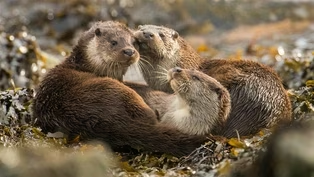
[ Otters squeaking ] These three cubs are five months old.
They're still totally dependent on their mother for food.
♪♪ She finds it in the seaweed... ...where there are great numbers of small fish.
♪♪ The fish are well camouflaged and not easy to see... ♪♪ ...but she uses her whiskers to feel for them.
♪♪ ♪♪ Otter mothers usually produce one or two cubs at a time.
Triplets like these are extremely rare, and each cub needs to eat a quarter of its body weight every day... ...so this mother has to catch a lot of food.
♪♪ ♪♪ She must also feed well herself if she's to survive the winter.
♪♪ ♪♪ The youngsters squabble over every fish.
♪♪ ♪♪ The biggest and most vigorous cub is the first to get food, and the smallest often goes hungry.
♪♪ This small male, however, decides to fish for himself and joins his mother farther out to sea.
He's caught something.
Unfortunately, it's something that bites back.
[ Otter yelps ] It's a crab... which is easy to catch, but not very nutritious.
♪♪ His mother has been too busy to notice... that he has strayed... [ Otter calling ] ...and now he is lost.
[ Waves crashing ] [ Otter continues calling ] Over a quarter of otter cubs don't survive their first year.
Many because they lose touch with their mothers.
[ Otter continues calling ] All he can do is to keep calling.
[ Otter barks ] ♪♪ [ Otter continues calling ] ♪♪ ♪♪ ♪♪ ♪♪ Winter in Shetland is very cold and life becomes hard for otters, both old and young.
♪♪ The bigger the cubs grow, the more food they need, and soon she will leave them to find food for themselves.
♪♪ [ Wind howling ] California's Channel Islands are surrounded by one of the richest of marine nurseries.
♪♪ A forest of giant kelp.
♪♪ This area has now been declared a marine reserve where fishing is totally banned.
♪♪ As a consequence, over a thousand different species of animals now live here.
♪♪ Among them giant sea bass, which elsewhere are critically endangered.
♪♪ On the floor of this submarine forest lives a particularly territorial species -- the Garibaldi.
This male has built his nest in the center of his territory... and here he cultivates a particular kind of red algae.
He carefully prunes it so that the females can lay their eggs on it.
♪♪ Several have already done that.
So now he has a potential brood of over 150,000.
He devotes his time to keeping the eggs free from algae and driving off hungry intruders.
♪♪ ♪♪ Some visitors, however, are so big they're best ignored.
His most dangerous enemy, however, is in fact relatively tiny... ♪♪ ...a little blue-banded goby... ♪♪ ...which takes advantage of the constant intruders... ♪♪ ...to steal the Garibaldi's eggs.
♪♪ But the biggest threat of all comes from the sea urchins.
♪♪ They eat virtually everything in their path... from the nest of the Garibaldi to the entire kelp forest.
♪♪ He does all he can to keep the urchins away.
♪♪ His neighbors help.
Inside the reserve, there are enough fish to keep urchin numbers in check.
♪♪ But the reserve is tiny.
♪♪ Outside it, humans have caught most of the fish that once kept down urchin numbers.
♪♪ And that, combined with an ever warming sea, has created a plague of urchins that have devastated the sea floor.
♪♪ They have destroyed the kelp forests along great stretches of California's coast... and now we ourselves are adding to that damage by using our seas as dumping grounds for our waste.
♪♪ Many animals have changed their parental behavior in order to survive in this new world.
♪♪ Pale octopus are relatively short-lived, and this female has just over a year in which to breed and raise her young.
♪♪ To do that, she has to find a safe den.
♪♪ ♪♪ She must choose carefully.
Good dens are rare.
♪♪ A discarded toilet could perhaps serve... but this one is engaged... ♪♪ ...and is already being fought over.
♪♪ A squirt from its owner's ink sack makes things clear.
She keeps looking.
Many of the available den sites are too exposed.
♪♪ She wants somewhere a little more secluded.
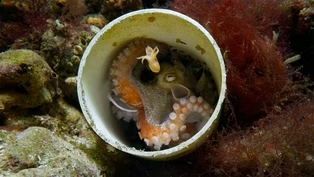
This plastic pipe is also occupied... by a male.
♪♪ But he is signaling his readiness to breed.
♪♪ ♪♪ ♪♪ ♪♪ It's an irresistible performance... ♪♪ ...so she inspects his den.
♪♪ ♪♪ It may not look like much, but to her, apparently, it will do.
♪♪ He nudges her into his home.
♪♪ She gives his den and him her seal of approval, and the two mate.
♪♪ A few days later, she starts laying her eggs inside the pipe.
She will eventually produce about 500 of them.
♪♪ ♪♪ She strokes them with her suckers to keep them clear of algae.
♪♪ Her home will hide her... and is easy to defend.
♪♪ But laying her eggs will be the last act of her life.
All octopus mothers die in their dens.
♪♪ ♪♪ As her eggs hatch, she takes her young in her arms... ...and uses her siphon to propel them to independence.
♪♪ ♪♪ ♪♪ In their year-long lives, 13 million tons of plastic will have been dumped onto their ocean homes.
Her final resting place was the home that she set out to find... but perhaps not the grave that anyone might consider appropriate for such a dedicated parent.
♪♪ [ Waves crashing ] As our seas change, those species with sufficient intelligence to adapt are finding new ways to support their offspring.
♪♪ And there are few sea creatures more inventive in their search for food than killer whales.
♪♪ They're powerful, swift, and agile.
But the key to their success lies beyond their physicality.
[ Whales calling ] It comes from their sociability and the way they use their complex relationships to teach one another.
♪♪ Each family is led by its grandmother, the matriarch.
♪♪ She may live into her 80s, far beyond the age of producing calves of her own.
But her responsibilities as a leader never cease.
♪♪ She plays a key part in teaching them all how to hunt.
♪♪ She initiates a chase... ♪♪ ...and the rest of the family join her.
♪♪ ♪♪ But this is not a game.
♪♪ One deliberately stops swimming in order to enable the others to practice a particular skill.
They push it beneath the surface and submerge its blowhole to prevent it from breathing.
♪♪ They are practicing the actions they will use to drown their prey.
And these orca need to be on top of their game.
♪♪ They hunt the largest animals that have ever lived.
Blue whales.
Such prey are too big for most orca to tackle... but this matriarch has found one.
♪♪ ♪♪ The blue whale seems to have been caught off guard.
♪♪ Working as a team, the orca keep their victim's blowhole beneath the surface... ♪♪ ...exactly as the matriarch taught them to do.
♪♪ ♪♪ The hunting of blue whales by orca has only recently been documented -- a new behavior that is a response to changes in their ocean home.
But many animals today are finding it hard to change their habits.
A trawler, fishing off the coast of South Africa.
It has attracted thousands of seabirds... [ Waves crashing ] ...and hundreds of fur seals.
The trawler's presence illustrates the problem that all these animals are now facing.
They're having to compete for their food with us.
♪♪ This trawler has collected its fish from the ocean's depths.
♪♪ But such fish are low in nutrients.
They're junk food for the birds and the seals.
♪♪ An adult Cape gannet male is flying in this crowd.
He's picked up what he can, and now he must begin the long flight back to his family.
♪♪ ♪♪ His home is Malgas Island, the world's second largest Cape gannet colony.
♪♪ [ Birds calling ] Using his own particular call, he locates his lifelong partner and their chick.
♪♪ ♪♪ ♪♪ But the fish he had scavenged doesn't contain enough energy to nourish his chick.
Gannet chicks need rich, oily foods such as sardines and anchovies -- the natural prey of these gannets.
As the parents change guard, the mother takes her turn and heads out to sea.
She must find suitable food if their chick is to survive.
♪♪ Cape gannets have nested on Malgas Island for generations.
But due to our overfishing, the gannets must now fly further out to sea to find what they need.
♪♪ ♪♪ At last, a hopeful sign -- common dolphins.
♪♪ The gannet mother knows they will lead her to food.
♪♪ And she's not alone.
[ Birds calling ] ♪♪ Sardines.
♪♪ She dives at 50 miles an hour... ♪♪ ...but fails to catch anything.
♪♪ The dolphins now encircle the sardines... ♪♪ ...and drive them upwards, trapping them against the surface.
For the gannets, it's the time to strike.
♪♪ ♪♪ They dive as deep as 65 feet.
♪♪ The mother makes one last dive... ♪♪ ...and catches one more fish.
[ Birds calling ] ♪♪ Now she has enough food for her chick.
♪♪ ♪♪ ♪♪ ♪♪ This hard-won meal is the last she will give this chick.
♪♪ ♪♪ It's now ready for independence.
♪♪ The chick makes its way to the edge of the colony where the wind is strongest.
♪♪ But first, she has to find her way through 40,000 neighbors.
♪♪ She joins dozens of others... ...all preparing for their first flight.
♪♪ She watches others make their attempts.
Those who catch the wind lift off and are away.
Those who don't have to face the fury of the Atlantic Ocean.
♪♪ ♪♪ And great danger lurks beneath the waves.
[ Bird squawks ] ♪♪ Cape fur seals.
♪♪ ♪♪ Gannets aren't usually taken by seals, but in this depleted ocean, prey of any kind is worth having.
♪♪ ♪♪ ♪♪ [ Bird squawking ] The food she took from her parents will only sustain her for a further day or so.
She waits for a gust of wind.
♪♪ ♪♪ Her timing... is not good.
♪♪ ♪♪ ♪♪ ♪♪ Safe in the shallows.
♪♪ Few get such a second chance.
♪♪ ♪♪ She must try again.
♪♪ ♪♪ ♪♪ ♪♪ She's made it.
♪♪ The depleted ocean will remain a hugely challenging place for her.
But the oceans are ecologically very resilient, and they can recover faster than any other habitat on Earth, given the right protection.
Gannet parents stay together for life, up to 20 years.
If their ocean home is given the chance to recover, the vast shoals of fish on which so many depend could reappear within the lifetime of these parents... ...and they could live to see a brighter future.
♪♪ ♪♪ ♪♪ ♪♪ To learn more about what you've seen on this "Nature" program, visit pbs.org.
♪♪

A Father Fish Starves to Protect His Young
Video has Closed Captions
Clip: S44 Ep8 | 3m 3s | This fish dad doesn’t eat for a month to protect his young. (3m 3s)
Octopus Mother Propels Her Young to Freedom
Video has Closed Captions
Clip: S44 Ep8 | 3m 8s | For an octopus mother, mating marks the beginning of the end. (3m 8s)
Otter Mom Juggles Raising Triplets
Video has Closed Captions
Clip: S44 Ep8 | 3m 5s | Otter triplets are extremely rare, and raising them pushes a mother to her limits. (3m 5s)
Preview of Parenthood "Oceans"
Video has Closed Captions
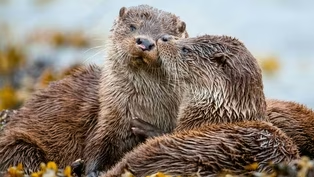
Preview: S44 Ep8 | 30s | Ocean parents must master dedication and intelligence to raise their young. (30s)
Providing Support for PBS.org
Learn Moreabout PBS online sponsorship
- Science and Nature

Explore scientific discoveries on television's most acclaimed science documentary series.













Support for PBS provided by:
Major support for NATURE is provided by The Arnhold Family in memory of Henry and Clarisse Arnhold, Sue and Edgar Wachenheim III, The Fairweather Foundation, Charles Rosenblum, Kathy Chiao and...